




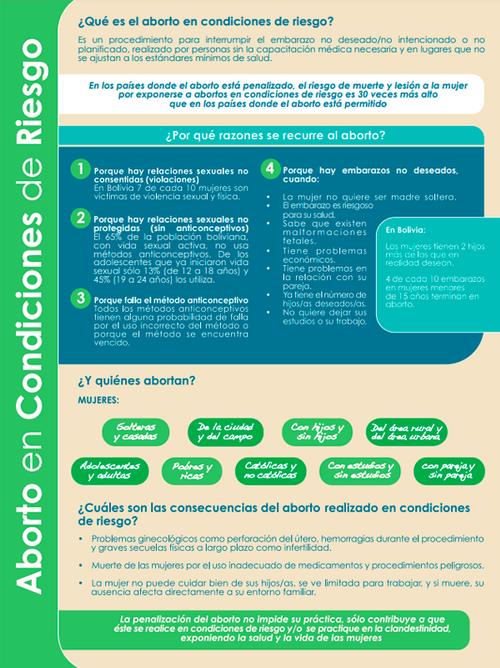
This fact sheet explains that unsafe abortion is a procedure to terminate an unwanted/unintended or unplanned pregnancy, performed by persons without the necessary medical training and in settings that do not meet minimum health standards. List the reasons for resorting to abortion and the consequences of unsafe abortion. Formulate and answer the question of what is safe abortion and what are the reasons for safe abortion.
The purpose of these guidelines is to present the complete set of all WHO recommendations and best practice statements related to abortion. While the legal and service delivery framework may vary from country to country, the recommendations and practices described in this document are intended to enable evidence-based decision making regarding quality abortion care.
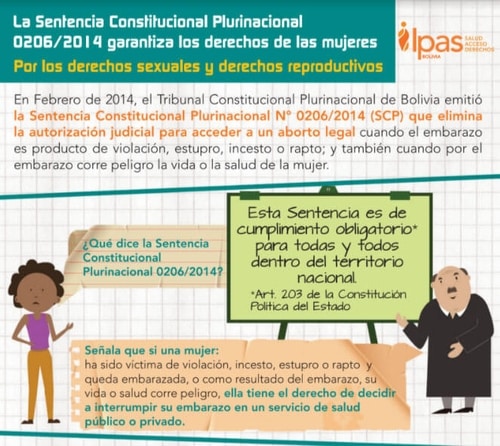
In February 2014, the Plurinational Constitutional Court of Bolivia issued Ruling No. 0206/2014, which eliminates the need for judicial authorization to access a legal abortion in cases of rape, statutory rape, incest, abduction, or when the pregnancy endangers the life or health of the woman. This flyer explains in a simple way how it is applied.
This report is an abridged version of the study The Figures Speak II (2018), which updates information that Ipas Bolivia published in 2011 in the publication “Las Cifras Hablan” (The Figures Speak). It presents estimates on the magnitude and indicators around the abortion situation between 2010 and 2016, the results of a survey of health-care professionals and of an analysis of the records of the notebook of hemorrhage in the first half of pregnancy (HPME) and legal termination of pregnancy (ILE).

This publication provides facts and figures resulting from a study on the magnitude of abortion in Bolivia. It demonstrates the social and public health consequences of the criminalization of abortion in the country.
Deadline for registration: February 01, 2024