
In the home of Adriana, a 20-year-old woman, no one knew she was going to have an abortion. Her parents found out shortly before she died from a perforated uterus and severe infection, the result of a botched procedure.
Adriana, whose name has been changed out of respect for her privacy, arrived at the Emergency Department of the Germán Urquidi Maternity Hospital in December 2023 with a serum and a gown, which led to the assumption that she had previously been treated elsewhere, possibly clandestinely, since she did not have a referral sheet proper to a hospital. Her health condition was critical.
The hospital director, Antonio Pardo, reported at the time that Adriana had a perforated uterus, intestinal lesions and irreversible sepsis upon arrival at Germán Urquidi, which resulted in her death.
The young woman was a university student and her family was unaware of her pregnancy. It was the victim’s boyfriend who informed the doctors that a week earlier she had had an abortion, without revealing details about the place where it was performed. Despite the efforts of the medical staff, it was not possible to save her.
In Bolivia, where abortion is illegal except in cases of risk to life, physical, social or mental health, incest, statutory rape or rape – and sometimes it is also complicated to access in these cases – Adriana decided to make the decision on her own and had a safe abortion.
Unsafe abortions” are the third leading cause of maternal mortality in the country and mainly affect women of limited economic resources. According to IPAS data, between 40,000 and 60,000 abortions are performed each year nationwide, which is more than 160 abortions per day. However, these figures do not reflect the reality, since many cases are performed clandestinely, which generates an underreporting of information.
Such is the case of Mercedes, a 19-year-old girl whose name has been changed to protect her identity. Neither her parents nor her siblings are aware that she decided to terminate a pregnancy. On the October morning when she made this decision, she was alone at home, as her family members were busy at work or studying. Although the solitude provided her with a certain degree of privacy, it also represented a risk, since in the event of complications she would not have immediate help.
Mercedes discovered her pregnancy a week before deciding to terminate it. Confused and not knowing what to do, she talked to her boyfriend and together they agreed to terminate the pregnancy. It was her partner who arranged for misoprostol pills at a pharmacy.
After taking the pills, Mercedes experienced strong contractions, abdominal pain and heavy bleeding with clots. However, the expulsion was not complete and she had to go to the pharmacy for help. There she was given an injection that completed the procedure, although the young woman does not know the type of medication she was given.
Mercedes’ case is not registered in the statistics, since she did not arrive at a health center to receive medical attention. Unlike two other young women, 19 and 22 years old, who traveled from Potosí to Cochabamba to seek medical attention for incomplete abortions between February and March of this year.
The first woman went to a healer who made her drink alcohol to supposedly “get rid of the evil inside her”, which led to her being admitted to the Intensive Care Unit (ICU). As a result, she suffered internal burns and a severe infection. The other young woman, on the other hand, ingested several abortion pills two months into her pregnancy, which triggered severe hemorrhaging and the need to undergo uterine cleansing.
According to Pardo, these clandestine practices can lead to serious infections and even death. In Bolivia, abortion is punishable by imprisonment of up to six years for those who perform the procedure, with or without the woman’s consent, as well as for the woman herself.
These legal restrictions do not stop the practice of abortion, but simply push women to resort to clandestine and dangerous methods, risking their health and lives, and facing the threat of imprisonment.
A clear example of this is the data provided by the Public Prosecutor’s Office, which reveals that from January 1 to May 15 of this year, 80 cases related to the crime of abortion have been reported throughout the country. Of these cases, 46 were classified as abortion, 1 as culpable abortion, 28 as forced abortion, 3 as pre-intentional abortion, 1 as abortion followed by injury or death and 1 as habitual practice of abortion.
Comparing these figures with the previous year, there was a slight increase, with 16 more cases reported in the same period. Last year, 64 cases were attended, with 38 of them classified as abortion, 15 as forced abortion, 6 as pre-intentional abortion, 4 as wrongful abortion and 1 as abortion followed by injury or death.
A particularly prominent case was that of a couple in Sucre, who were sentenced for abortion in October 2022. Although they were sentenced to two years in prison, the judicial pardon allowed them to avoid jail time.
Another complicated story about the mishandling of abortion in the country is that of José, a general practitioner who one afternoon received a woman in his office in Cochabamba who was suffering from severe hemorrhaging and requested his urgent help. He attended to her, or at least was able to slow the bleeding and calm her down a bit before referring her to another hospital where the police were immediately called to report a case of clandestine abortion.
Accused of the alleged illicit practice, José spent more than a year in San Antonio prison seeking to prove his innocence. Silently and to himself, he prayed that the woman he had helped would admit to the authorities that he had performed the procedure on someone else; however, she was reluctant to testify until it was impossible to sustain the false version.
Finally, investigations revealed that the young woman had a clandestine and unsafe abortion with the help of her cousin, a first-year medical student, who was arrested, as far as was known about the case.
In Bolivia, abortion can only be carried in certain circumstances established in the Plurinational Constitutional Ruling 0206/2014. Women, girls or adolescents can request a Legal Termination of Pregnancy (ILE) if there is a risk to their life or if the pregnancy is the result of incest, statutory rape or rape. However, the request for this procedure continues to face obstacles due to lack of knowledge of the regulations, criminalization, medical conscientious objection, differences in gestational age, late detection of pregnancy or other factors.
One example is the case of a 17-year-old teenager in the Tropic of Cochabamba, who revealed seven months ago that she had been forced to have two clandestine abortions as a result of rapes perpetrated by her biological father. After denouncing the fact, her aggressor was placed in preventive detention in the El Abra prison.
This case is not unique and the percentage of ILEs in rape victims remains low in Bolivia.
According to the Gender Observatory of the Women’s Coordinating Committee, with data obtained from the National Health Information System – Epidemiological Surveillance of the Ministry of Health, 1,376 Legal Terminations of Pregnancy (ILEs) were performed in Bolivia in 2023. Of the total, 854 (62%) were performed due to maternal health risk, 228 (17%) due to congenital malformations and 294 (21%) due to sexual violence.
Regarding the latter cause, it was reported that 83% of the patients were women up to 19 years old, 12% were between 20 and 34 years old, and the remaining 5% were in the range of 35 to 49 years old.
In Cochabamba alone, according to information provided by Rossemary Grágeda, head of the Child, School and Adolescent unit of the Departmental Health Service (SEDES), 248 ILEs were performed on girls and adolescents between 10 and 19 years of age between January and July 2023, equivalent to one intervention every 21 hours.
Of these cases, 13 corresponded to girls aged 10 to 14 years, while 235 corresponded to adolescents aged 15 to 19 years. In 2022, an average of 15 to 16 adolescent pregnancies were registered every day, and it is estimated that in 2023 there was a 14 to 15% increase in this figure. However, only about 8% of pregnant adolescents in Cochabamba had access to an abortion.
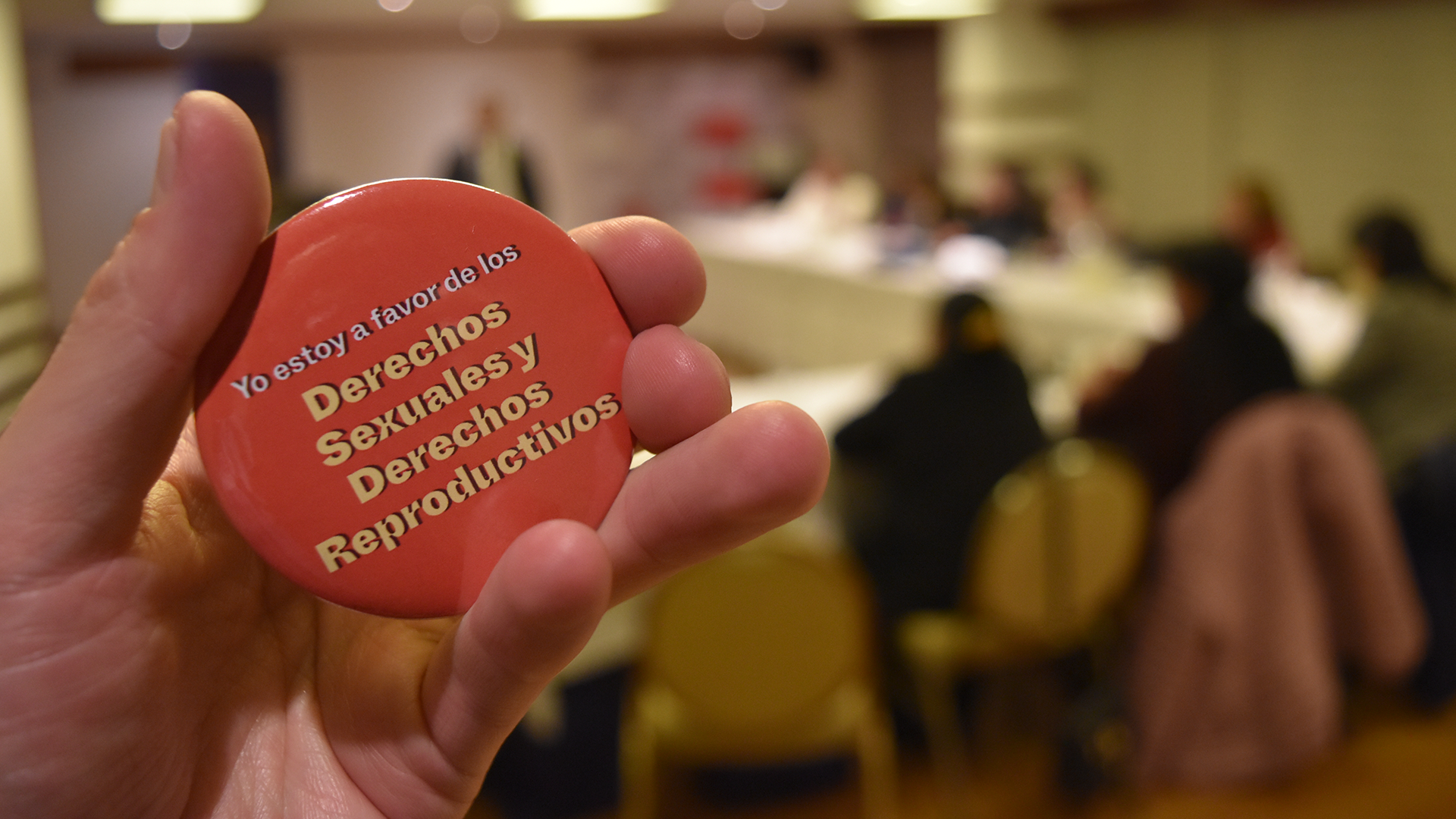
In view of this problem, the legalization of abortion is part of a draft bill on Sexual and Reproductive Rights in Bolivia, with the objective of avoiding the death of women due to clandestine practices, according to Senator Virginia Velasco. She calls to eliminate the “taboo” and face the reality of the country. The bill also includes preventive measures to avoid unwanted pregnancies, promote the use of contraceptives, prevent obstetric violence and provide comprehensive care.
Health professionals point out that safe abortions have a very low probability of complications, which highlights the danger of unsafe and clandestine practices that can cause infections and uterine perforations, putting women’s lives at risk. The illegality of abortion leads some women not to seek medical help in case of complications, while the illegal trade continues to profit at the expense of health and life.
The ease with which references to places where abortion pills are sold can be found with a simple click on the Internet is worrisome. In the Marketplace, for example, you can find messages such as “Unwanted pregnancy”, “You still have time. If your contraceptive method has failed and you need an abortion, get informed and decide”, or “Unwanted pregnancy?
Illegal sales points are usually located in squares, markets, terminals and universities, where marketers offer the pills and provide instructions on their use, without adequate training.
Despite the doubts that arise among women after taking the pills, many avoid seeking professional help for fear of being prosecuted. Questions such as “I have been bleeding for more than 30 days, is it normal?”, “I have taken the pill and I am bleeding brown and not much”, or “What if I have not had a period after taking the pills?”, are common in videos uploaded on platforms such as TikTok, where reference is made to abortion. However, it is unclear whether these individuals received answers to their questions or sought medical help, despite the fact that their health and life could be at risk.
The truth is that more and more women’s lives are put at risk because of the practice of clandestine abortions in precarious or non-existent health conditions. Mostly young, many of them find themselves without support even in their own homes. Instead of finding the back-up and support they need, they rely on bad doctors, fake professionals or negligent pharmacists to resolve a life-threatening situation.