
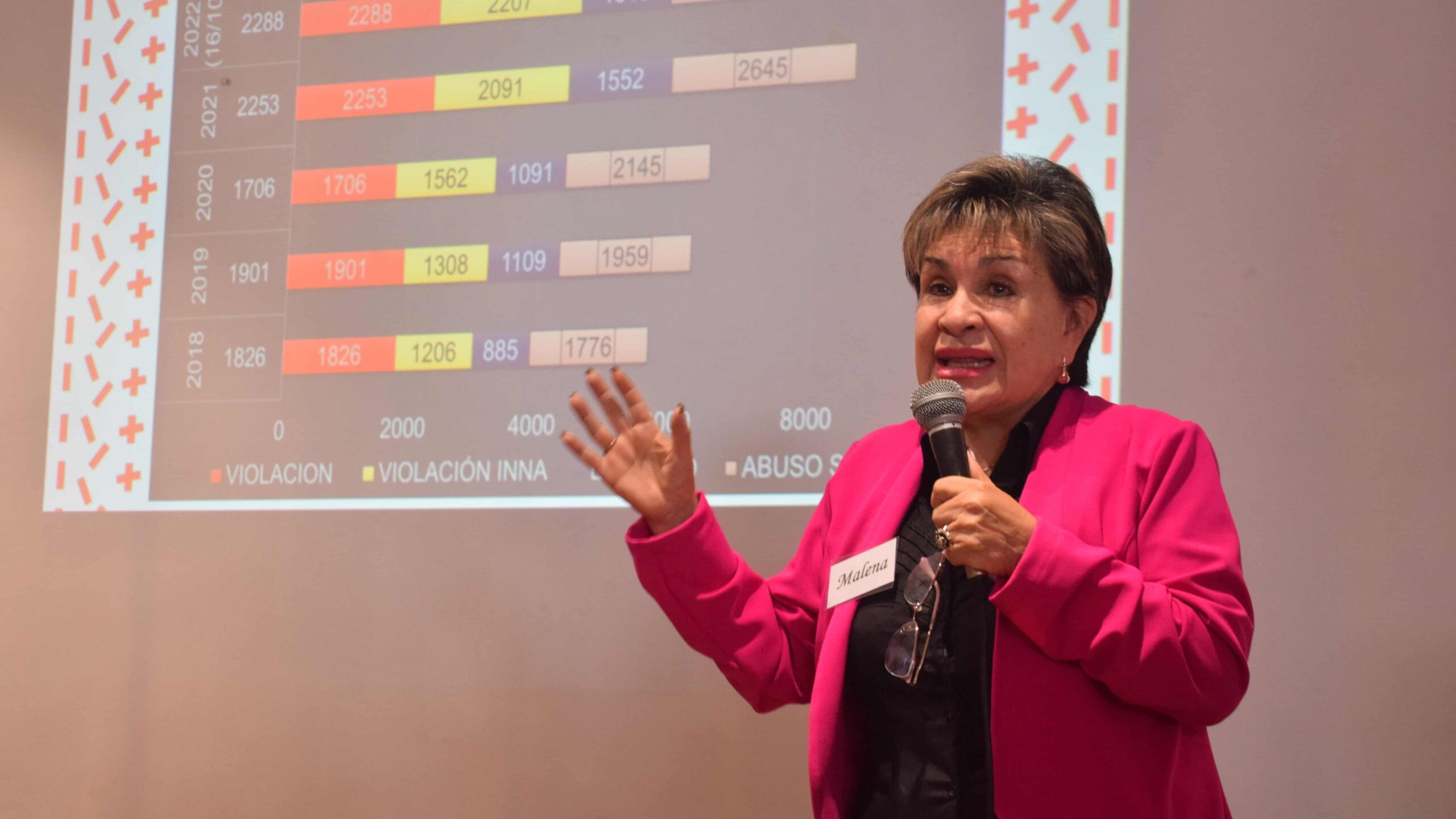



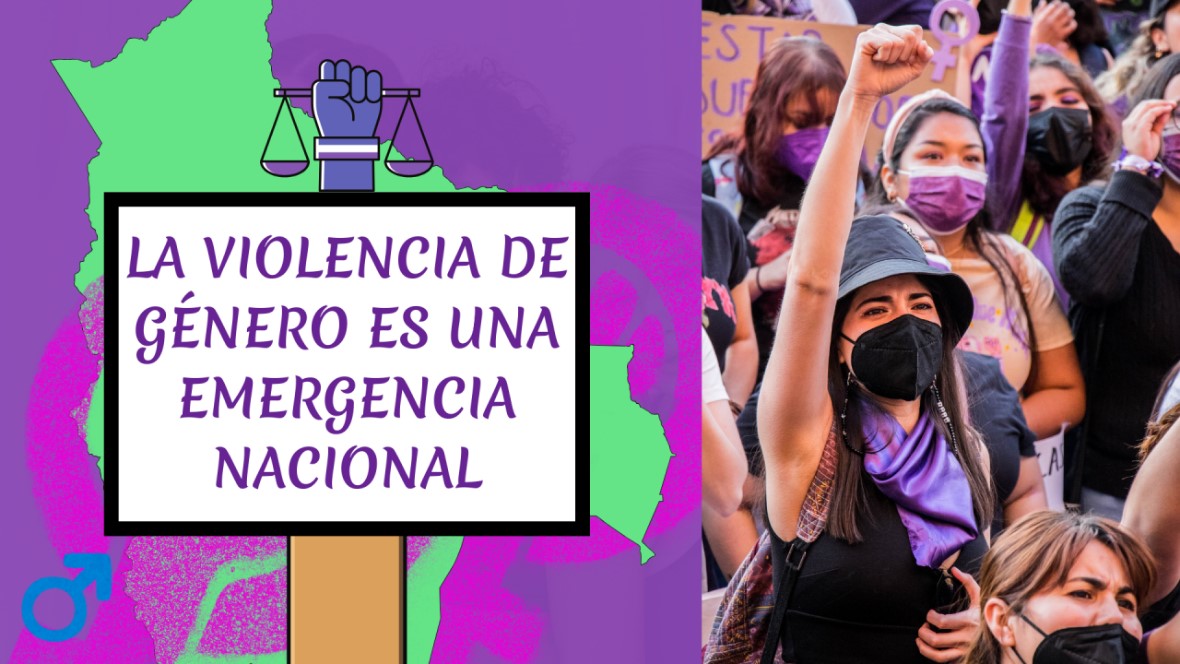
Source: Right to a Life Free of Violence for Women Bulletin, 2024.
In almost 13 years of Law 348, domestic and sexual violence continues to be the most prevalent, with little real progress in addressing it. Gabriela Montaño, former Assemblywoman of the Movimiento Al Socialismo (MAS), criticized the ineffectiveness of the law, pointing out that it is isolated within a corrupt judicial system. Lourdes Millares, also a former assemblywoman, denounced the constant violation of women’s rights, highlighting the impunity in femicides.
La Paz, Bolivia. Gender violence remains a persistent crisis in Bolivia, with more than 40,000 complaints annually, according to data from the Public Prosecutor’s Office, despite a slight decrease in femicides since 2018. In 2024, 79 femicides were registered, an alarming figure that reflects the serious situation. The statistics, constant in recent years, reveal a lack of significant progress in the prevention of violence against women.
Law 348, Integral to Guarantee Women a Life Free of Violence, in force since 2013, seeks to guarantee a life free of violence, but its implementation faces obstacles such as lack of resources, corruption and revictimization in the judicial system. Although there are protection measures in place, impunity persists, with a small percentage of cases reaching conviction.
Types of violence against women
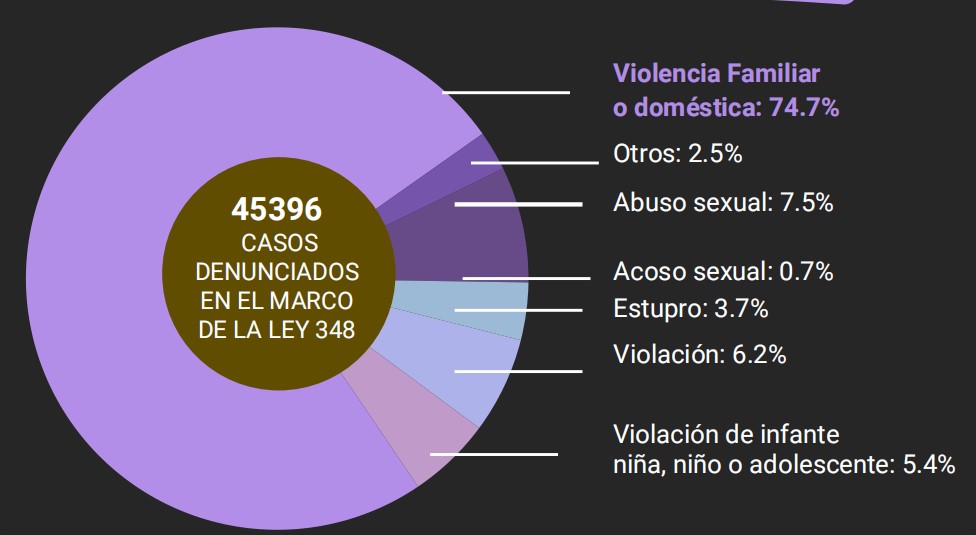
Source: Right to a Life Free of Violence for Women Bulletin, 2024.
In almost 13 years of Law 348, domestic and sexual violence continues to be the most prevalent, with little real progress in addressing it. Gabriela Montaño, former Assemblywoman of the Movimiento Al Socialismo (MAS), criticized the ineffectiveness of the law, pointing out that it is isolated within a corrupt judicial system. Lourdes Millares, also a former assemblywoman, denounced the constant violation of women’s rights, highlighting the impunity in femicides.
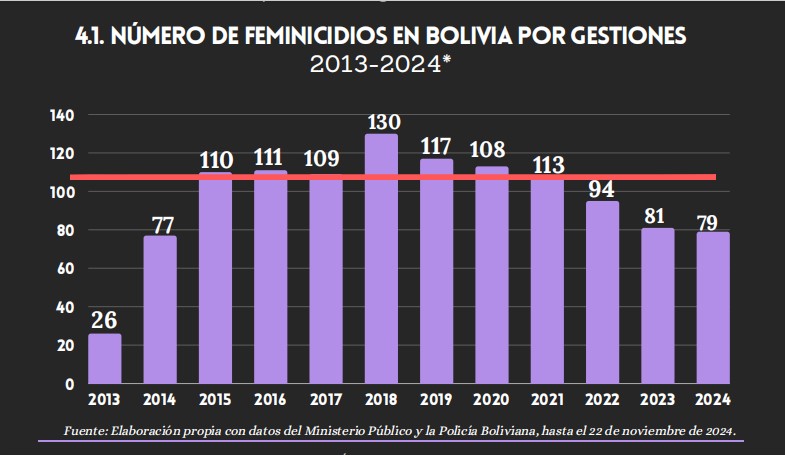
Source: Right to a Life Free of Violence for Women Bulletin, 2024.
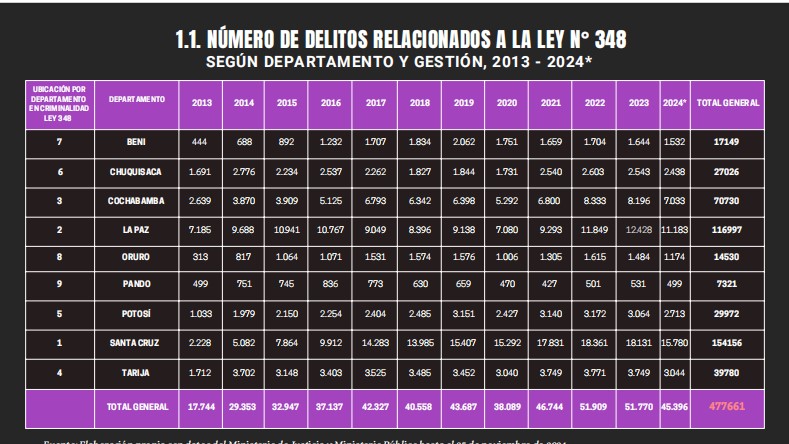
Source: Right to a Life Free of Violence for Women Bulletin, 2024.
A structural problem and the weakness of the judicial system
For their part, former spokespersons, such as Dina Chuquimia, called for the 2025 government programs to be more forceful, focusing especially on girls and older women, who are at greater risk of violence. Tania Sanchez, director of the Coordinadora de la Mujer, stressed the need for law reform and a profound transformation in the administration of justice.
In the context of the general elections of 2025, there are still no concrete proposals from the political parties for a frontal fight against this crime. Elizabeth Reyes, of Unidad Nacional, promotes a “political system friendly to the condition of women” and emphasizes the fight against harassment and political violence, in addition to femicides.
Other political actors recognize that violence against women has not been an issue that has been effectively addressed in recent years. For example, Svonko Matcovick, from Creemos, pointed out the lack of fulfillment of functions by the justice system and the police, which perpetuates discrimination in the attention to victims. The Christian Democratic Party (PDC), without going into details, assured to have a proposal to address gender violence, and Ruth Nina of Pan-Bol placed the fight against violence as a central point in its electoral agenda.
On the other hand, the Unity Bloc, formed by leaders such as Samuel Doria Medina and Tuto Quiroga, committed themselves to include in their government program the restitution of democracy; defense of nature; respect for indigenous peoples and land; and the fight against corruption and drug trafficking. And what about violence? It does not appear among the proposals neither of the Unity Bloc nor of other candidates such as Manfred Reyes Villa or Chi Hyun Chung.
María Pachacute, of Comunidad Ciudadana (CC), highlights the need to improve the interpretation and application of Law 348, while Ninoska Morales, of MAS, proposes stiffer penalties for aggressors and reinforced protection for victims.
Civil society demands and future prospects
At the civil society level, feminist and human rights organizations are demanding greater allocation of resources for shelters, training of justice operators with a gender perspective, and the creation of an effective monitoring system to evaluate progress in policy implementation.
The crucial question that remains is whether political parties, in their quest for power, will make a genuine commitment to women’s safety and rights, or whether male violence will remain an outstanding debt that continues to claim lives.
With the 2025 elections as a backdrop, the challenge is to elect not only new leaders, but those who will prioritize a problem that affects thousands of women and girls in Bolivia. Political indifference to this crisis is a challenge that is yet to be resolved.